AI Can Write Code. How Can Software Development Companies Still Win Enterprise Clients?
Jude Festus
Author
November 09, 2026
Published
Reading
Software companies are already feeling the pressure from AI coding tools. Even Zoho’s Sridhar Vembu has spoken up about the risk AI poses to jobs and the SaaS industry. Apps that used to take days can now come together with a handful of prompts. So why would an enterprise keep paying a development firm?
The worry isn’t baseless. For years, software firms have sold their developers’ skills and availability. But generating code and engineering software are two different jobs.
Generating Code Isn’t the Same as Engineering
Say a company uses AI to build a payment app. The tool spits out an interface, APIs, and tests, and the demo works fine. Then a payment goes through, the network drops before the confirmation comes back, and the customer hits retry. Now they’ve been charged twice, and the accounting records don’t match.
Nobody wants to find that out in production. AI can help build the fix, but only if someone understands the requirements well enough to spot the problem and judge whether the fix actually works.
Or take an enterprise running applications built fifteen years ago. The systems lean on each other in ways nobody documented. Swap out one component and another department’s work breaks, sometimes weeks later. Teams want different things, and the data is a mess.
Engineers work inside those limits. AI speeds up testing, refactoring, and routine implementation. It doesn’t review security for you, validate integrations, or answer for it when something fails.
Software Companies Need to Explain What They Actually Solve
Open the websites of a few software development companies, and you’ll see the same thing: experienced developers, cutting-edge technology, and innovative solutions. Every one of them claims to be different, and they all sound alike.
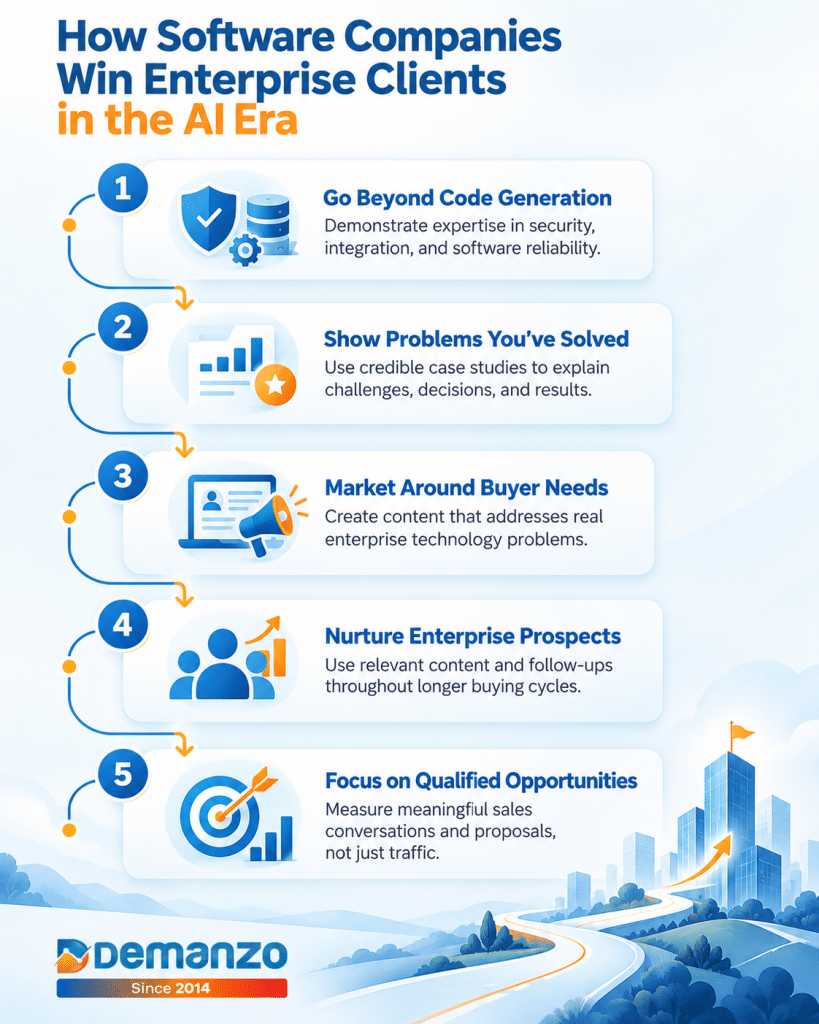
Enterprise buyers get almost nothing from that. Someone modernizing an aging billing platform cares more about migration risk and business disruption than whether the vendor knows the newest JavaScript framework.
A company building customer-facing apps could say how it handles traffic spikes, protects customer data, and ships new features without disturbing current users. Buyers understand those concerns. Explaining them shows far more expertise than a list of technologies.
Market IT Services Around the Buyer’s Problems
Think about how enterprises actually look for technology partners. Someone stuck with an outdated billing system will probably search for legacy application modernization or software integration services long before they search for a specific development company.
That’s why B2B marketing for IT companies should start with the problems your prospects are trying to solve. Service pages, technical guides, and case studies let you show your expertise while answering questions buyers already have.
Each stakeholder cares about something different. The technology director thinks about security and architecture, finance watches the cost, and operations managers worry about disruption. A generic pitch about digital transformation won’t satisfy any of them.
Turning Interest Into Enterprise Sales
Enterprise deals rarely happen fast. A client might spend months comparing vendors and sorting out a budget before they decide.
A good demand generation strategy for IT companies has to account for that. Instead of sending the same promotional email again and again, development firms can share material that speaks to what the prospect actually needs. A case study on a similar migration beats yet another request to schedule a call.
Your CRM can show what accounts need and where deals stall. Measure marketing by qualified conversations, proposals, and sales opportunities, not just website traffic or how many leads you collected.
AI will take over more of the routine coding. Enterprise systems still need engineering judgment, integration work, security reviews, and ongoing maintenance.
Generated code has to be checked against real business requirements. Developers still own the design decisions, the testing, and whether it holds up in production.
Search content, relevant LinkedIn campaigns, and steady follow-up tend to work best, as long as you judge them by qualified sales opportunities.
Making Expertise Visible
AI has made code cheaper to produce, but software was never valuable just because someone spent hours typing it. Businesses pay for systems that solve problems without creating pricier ones. Development companies that get this have a real reason to exist. They just have to say so.
At Demanzo, we help IT and software companies explain their expertise and reach enterprise buyers whose needs fit what they do. If your team handles hard engineering projects but struggles to land the right clients, tell us what you’re trying to grow.
Jude Festus is an accomplished digital marketing and WordPress expert with over 18 years of professional experience. He is the founder of Demanzo, a results-driven digital marketing agency specializing in demand generation for B2B tech companies, hospitals, and SMBs. Under his leadership, Demanzo has become a trusted partner for businesses seeking growth through cutting-edge digital marketing strategies.