

Quick Facts:
• Eliminated Form-Based Friction – Drift identified that traditional forms were slowing down conversions and replaced them with instant, real-time conversations.
• Created Conversational Marketing Category – By introducing live chat and chatbots, Drift transformed how businesses engage with buyers instantly.
• Focused on Pain-First Positioning – Instead of selling features, Drift highlighted the real issue: delays in response and poor user experience.
• Delivered Measurable Growth Results – Businesses using conversational marketing saw up to 10x more sales conversations and significantly higher lead quality.
• Redefined Modern B2B Lead Generation Strategies – Drift shifted the focus from collecting leads to engaging buyers instantly, now a core strategy in 2026.
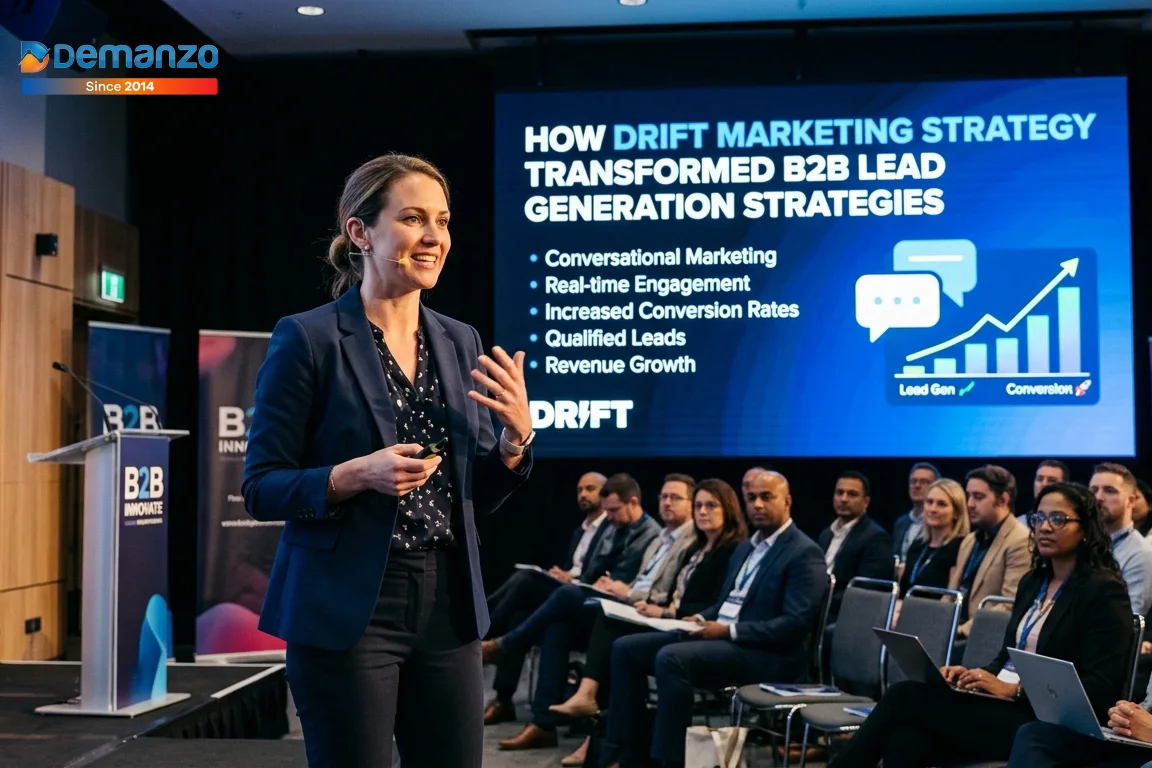
In this blog, we are going to break down how Drift, a B2B SaaS company completely flipped the script on traditional lead generation by attacking one simple problem: waiting. We will look at what made their positioning so powerful, how conversational marketing became a billion-dollar idea, and what the drift marketing strategy teaches us about selling pain before a product. If you are running a B2B business in India today, this is one story you cannot afford to skip.
The Form Was Never the Solution – It Was the Problem
Cast your mind back to how B2B lead generation worked for years. A visitor lands on your website, fills a form, waits for an email, waits again for a sales call and by the time someone actually responds, the buyer has already spoken to three of your competitors.
It was a broken system. And everybody knew it.
What is surprising is not that it was broken. What is surprising is that for years, nobody questioned it. Forms were everywhere. They felt official. They felt like a process. In reality, they were just friction dressed up as professionalism.
This is exactly the gap that Drift walked into in 2017.
“Kill the Form” – Two Words That Changed B2B Marketing
When Drift announced their bold positioning Kill the Form it was not just a product feature. It was a statement.
They were not saying “our chatbot is better than your form.” They were saying the entire waiting game was the enemy. They gave the frustration a name. They gave it to a villain. And in doing so, they made every B2B marketer sit up and think: wait, is my form actually hurting me?
Watch how this story is told visually in this short reel it captures the Drift philosophy better than any whitepaper could:
The real genius here was not the chatbot. It was the positioning. Drift did not market a feature they marketed a problem that every B2B buyer was silently suffering through.
Conversational Marketing – From Bold Idea to Billion-Dollar Category
By September 2021, Drift crossed a $1 billion valuation. That kind of growth does not come from building a slightly better form replacement. It comes from owning a category.
Drift created the category of “Conversational Marketing” and owned it completely, getting over 150,000 businesses onboard and being profiled in more than 100 publications including the New York Times, Forbes, and Harvard Business Review. Real-time chat replaced the dead zone between interest and response. Instead of a 48-hour email wait, buyers could now talk to a sales rep or a bot instantly, book a meeting on the spot, and move forward all in one session.
Research backs this up: 55% of companies that use chatbots report getting more high-quality leads, and 59% of customers expect a chatbot to respond within 5 seconds. For Indian B2B businesses where sales cycles can be long and follow-ups often get lost in WhatsApp threads this kind of instant response model is incredibly relevant.
What the Drift Playbook Actually Teaches Us
Here is the real lesson that most people miss when they look at Drift’s story.
They did not win because they had the best technology. Plenty of chat tools existed before Drift. They won because they reframed the conversation entirely.
Pain came first. Product came second.
This is the foundation of strong B2B positioning and it is something Indian SaaS companies, agencies, and service businesses are only beginning to apply seriously. Most Indian B2B websites still lead with “Who We Are” and “Our Services.” Very few open with the customer’s actual frustration.
Drift opened with: your buyer is leaving because you are making them wait. Everything else the chatbot, the integrations, the pricing came after that.
Case Study: How Drift’s Marketing Strategy Helped Them Build a Billion-Dollar Business
This is not just a feel-good story about a startup that got lucky. Drift’s growth is a step-by-step proof that when your marketing leads with the right pain, the numbers follow.
Here is how it actually played out.
Step 1 – They Named the Problem Nobody Was Talking About
When Drift launched in 2015, the B2B SaaS space was crowded. Live chat tools existed. CRM integrations existed. Follow-up email sequences existed.
What did not exist was someone willing to stand up and say: the entire lead capture process is broken.
Drift was founded with one clear mission to remove friction from the B2B buying process and built its entire brand around that single idea from day one. They did not just build a product. They built a category. And they owned it completely.
That category-creation move is what separated Drift from every other chat tool in the market.
Step 2 – They Used Their Own Product as Their Marketing Engine
Drift’s AI-powered chat agents engage buyers in meaningful, brand-aligned conversations 24/7 instantly qualifying leads and letting buyers book meetings or chat live with a rep, all without a single form.They were not just selling conversational marketing they were doing it on their own website, every single day.
This gave them two things: a live proof of concept and a continuous feedback loop from real buyer behaviour. Every visitor to Drift.com experienced the product before they even signed up.
Step 3 – The Results Came Fast and They Were Hard to Ignore
The strategy was not just philosophically strong. The numbers proved it.
Companies using conversational marketing reported 10 times more sales discussions, 70% more marketing qualified leads, and 64% more meetings scheduled. Usage of chatbots as a brand communication channel grew by 92% in a single year with 24.9% of buyers using chatbots to communicate with businesses, up from just 13% the year before.
And for Drift specifically, by September 2021, they crossed a $1 billion valuation and officially became a unicorn, built almost entirely on the back of a positioning idea rather than a feature war.
Step 4 – The Market Validated Everything They Said
In 2024, Drift was recognised as a Leader in The Forrester Wave for Conversation Automation Solutions for B2B receiving the highest scores possible in 17 out of 33 criteria evaluated. Customers using Drift’s newer AI tools saw up to 7x increase in buyer engagement, while those using Bionic Chatbots saw 50% more opportunities with 45% fewer meetings needed to close them. The product kept evolving. The core idea never did. Meet the buyer. Respond fast. Remove the wait.
Conclusion
Drift did not just build a product. They built a belief system.
They believed that making a buyer wait was not a process, it was a mistake. They named that mistake, gave it a villain, and built an entire company around fixing it. The product was almost secondary. The positioning was everything.
If you are running a B2B business in India today and still relying on slow follow-ups, long email chains, and forms that go cold, the lesson from Drift is not to go buy a chatbot. The lesson is to start thinking about your buyer’s time as the most valuable thing on your website. That shift in thinking is where the b2b lead generation strategies that actually work in 2026 begin.
Sell the pain. Let the product follow.
Frequently Asked Questions (FAQ):
2. Why did Drift say “Kill the form” in B2B marketing?
Drift introduced the phrase “Kill the form” to highlight the inefficiency of traditional lead generation methods. Forms created delays and caused potential customers to lose interest. By challenging this common practice, Drift positioned itself as a disruptor in the B2B space. The idea was not just about removing forms but about eliminating waiting and improving the speed of communication, which directly impacts lead conversion and customer satisfaction.
3. How does conversational marketing improve B2B lead generation?
Conversational marketing improves B2B lead generation by enabling instant engagement with potential customers. Through chatbots and live chat, businesses can answer questions, qualify leads, and guide users in real time. This reduces friction in the buyer journey and increases the chances of conversion. It also allows businesses to capture high-intent leads at the right moment, making the entire process faster and more efficient.
4. What are the benefits of using chatbots in B2B websites?
Chatbots provide several benefits for B2B websites, including instant response, 24/7 availability, and automated lead qualification. They help businesses engage visitors immediately, reducing the chances of losing potential customers. Chatbots also collect valuable data about user behaviour and preferences, which can be used to improve marketing strategies. Overall, they enhance user experience and increase the efficiency of lead generation efforts.
5. How did Drift become a billion-dollar company?
Drift became a billion-dollar company by focusing on a unique positioning strategy rather than just product features. They identified a common problem in B2B marketing delayed responses and built their entire brand around solving it. By introducing conversational marketing and promoting real-time engagement, they created a new category. This strong positioning, combined with effective execution, helped them achieve rapid growth and industry recognition.
6. What makes modern B2B lead generation strategies different in 2026?
Modern B2B lead generation strategies focus on real-time engagement, intent-based targeting, and personalised communication. Unlike traditional methods, they use AI, chatbots, and data analytics to interact with customers instantly. Businesses are also leveraging video content, omnichannel marketing, and account-based strategies to improve conversions. The key difference is the shift from passive lead collection to active, real-time engagement with potential buyers.
7. How can Indian businesses apply Drift marketing strategy?
Indian businesses can apply Drift marketing strategy by adopting conversational tools like chatbots and live chat on their websites. They should focus on reducing response time and simplifying the user journey. Highlighting customer pain points in messaging and providing instant solutions can improve engagement. This approach is particularly effective in India, where users expect quick responses and seamless digital experiences across multiple platforms.
8. What is the role of speed in B2B lead generation?
Speed plays a critical role in B2B lead generation because it directly affects user intent and decision-making. When a potential customer shows interest, immediate engagement increases the likelihood of conversion. Delays can result in lost opportunities as users may move to competitors. Fast response times build trust, improve user experience, and shorten the sales cycle, making speed a key factor in successful lead generation.
9. How does Drift’s strategy improve conversion rates?
Drift’s strategy improves conversion rates by reducing friction and enabling real-time communication. Instead of making users wait, it allows them to interact instantly with a business. This keeps users engaged and increases the chances of conversion. Additionally, chatbots can qualify leads and guide them through the process, ensuring that only high-quality leads move forward in the sales funnel.
10. What is the biggest lesson from Drift marketing strategy?
The biggest lesson from Drift marketing strategy is to focus on the customer’s problem before promoting the product. By highlighting the pain point of delayed responses Drift created awareness and demand. This approach makes the solution more relevant and effective. Businesses that adopt this mindset can improve their marketing impact, build stronger connections with their audience, and achieve better conversion results.
2. Why did Drift say “Kill the form” in B2B marketing?
Drift introduced the phrase “Kill the form” to highlight the inefficiency of traditional lead generation methods. Forms created delays and caused potential customers to lose interest. By challenging this common practice, Drift positioned itself as a disruptor in the B2B space. The idea was not just about removing forms but about eliminating waiting and improving the speed of communication, which directly impacts lead conversion and customer satisfaction.
3. How does conversational marketing improve B2B lead generation?
Conversational marketing improves B2B lead generation by enabling instant engagement with potential customers. Through chatbots and live chat, businesses can answer questions, qualify leads, and guide users in real time. This reduces friction in the buyer journey and increases the chances of conversion. It also allows businesses to capture high-intent leads at the right moment, making the entire process faster and more efficient.
4. What are the benefits of using chatbots in B2B websites?
Chatbots provide several benefits for B2B websites, including instant response, 24/7 availability, and automated lead qualification. They help businesses engage visitors immediately, reducing the chances of losing potential customers. Chatbots also collect valuable data about user behaviour and preferences, which can be used to improve marketing strategies. Overall, they enhance user experience and increase the efficiency of lead generation efforts.
5. How did Drift become a billion-dollar company?
Drift became a billion-dollar company by focusing on a unique positioning strategy rather than just product features. They identified a common problem in B2B marketing delayed responses and built their entire brand around solving it. By introducing conversational marketing and promoting real-time engagement, they created a new category. This strong positioning, combined with effective execution, helped them achieve rapid growth and industry recognition.
6. What makes modern B2B lead generation strategies different in 2026?
Modern B2B lead generation strategies focus on real-time engagement, intent-based targeting, and personalised communication. Unlike traditional methods, they use AI, chatbots, and data analytics to interact with customers instantly. Businesses are also leveraging video content, omnichannel marketing, and account-based strategies to improve conversions. The key difference is the shift from passive lead collection to active, real-time engagement with potential buyers.
7. How can Indian businesses apply Drift marketing strategy?
Indian businesses can apply Drift marketing strategy by adopting conversational tools like chatbots and live chat on their websites. They should focus on reducing response time and simplifying the user journey. Highlighting customer pain points in messaging and providing instant solutions can improve engagement. This approach is particularly effective in India, where users expect quick responses and seamless digital experiences across multiple platforms.
8. What is the role of speed in B2B lead generation?
Speed plays a critical role in B2B lead generation because it directly affects user intent and decision-making. When a potential customer shows interest, immediate engagement increases the likelihood of conversion. Delays can result in lost opportunities as users may move to competitors. Fast response times build trust, improve user experience, and shorten the sales cycle, making speed a key factor in successful lead generation.
9. How does Drift’s strategy improve conversion rates?
Drift’s strategy improves conversion rates by reducing friction and enabling real-time communication. Instead of making users wait, it allows them to interact instantly with a business. This keeps users engaged and increases the chances of conversion. Additionally, chatbots can qualify leads and guide them through the process, ensuring that only high-quality leads move forward in the sales funnel.
10. What is the biggest lesson from Drift marketing strategy?
The biggest lesson from Drift marketing strategy is to focus on the customer’s problem before promoting the product. By highlighting the pain point of delayed responses Drift created awareness and demand. This approach makes the solution more relevant and effective. Businesses that adopt this mindset can improve their marketing impact, build stronger connections with their audience, and achieve better conversion results.
