

Key Takeaways from HubSpot’s Inbound Marketing Strategy
• Sell the idea first: HubSpot promoted “inbound marketing” before selling software.
• Education drives demand: Blogs, courses, and events built trust at scale.
• Give value for free: Free tools attracted and converted users.
• Inbound beats outbound: Higher-quality leads and better conversions.
• Build a community: Turn strategy into a movement for long-term growth.
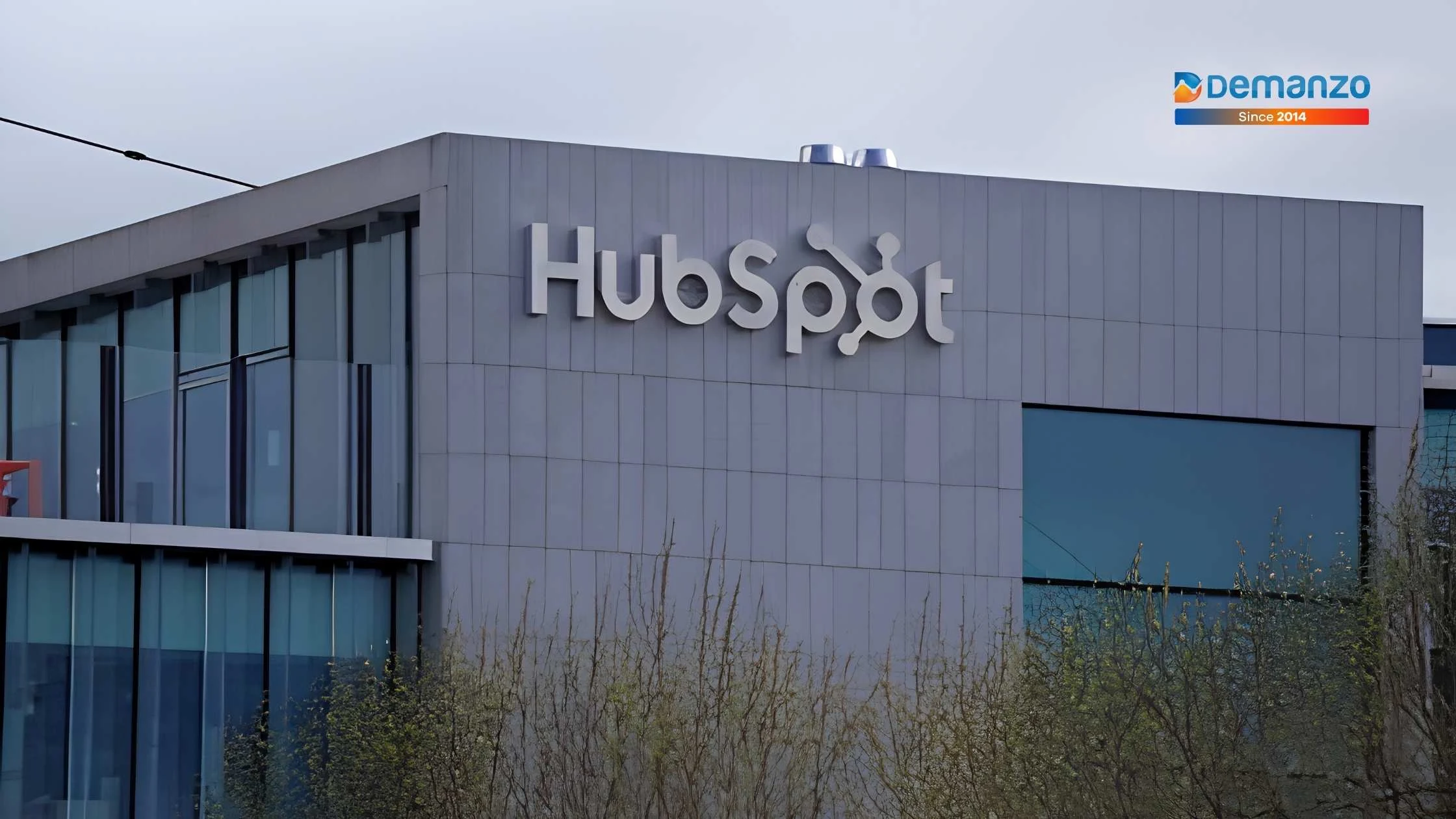
HubSpot didn’t sell software. They sold a belief and built a $20B company around it. Here’s the GTM playbook every B2B brand should study.
If you search for anything related to digital marketing, content strategy, or inbound leads, there is a near-certain chance you will encounter a HubSpot article ranking at the top. That is not an accident. HubSpot’s rise from a 2006 MIT startup to a $20+ billion company is one of the most studied inbound market success stories in B2B history. But the lesson most people miss is this: HubSpot didn’t win by building the best software first. They won by owning a point of view. This post breaks down how HubSpot’s inbound marketing strategy worked, why it was so effective, and what B2B marketers and founders can apply to their own growth campaigns today.
The Problem HubSpot Saw Before Everyone Else
It was 2006. The dominant marketing playbook looked like this: mass cold calling, interruptive display ads, unsolicited email blasts, and buying media attention at scale. It was expensive, it was noisy, and it was starting to stop working. The internet was changing how people discovered, researched, and bought products. Consumers were developing what marketers now call “banner blindness.” Phone calls went unanswered. Email open rates collapsed.
“Traditional marketing was becoming less effective as consumers became more adept at avoiding unwanted ads. This realisation led to the creation of the inbound marketing concept.” – HubSpot founding thesis, 2006
Brian Halligan and Dharmesh Shah, then MIT graduate students, saw this shift clearly. Their insight, as described in research from Sequoia Capital, was that it was now affordable and more effective to pull customers in through search engines and content than to push marketing out through ads and telemarketers. They tested this theory with a blog started almost as a hobby and, in doing so, stumbled onto the founding logic of what would become HubSpot.
The GTM Move That Changed Everything: Naming the Shift
Here is the part most case studies gloss over. SEO existed before HubSpot. Blogging existed. Content marketing existed. What HubSpot did was not invent any of these tactics. What they did was give the entire shift a name and then own that name.
They called it Inbound Marketing. This naming decision was strategic at every level. As co-founder, Dharmesh Shah later explained, they deliberately chose not to trademark or copyright the term. They wanted everyone to use it because HubSpot planned to be the company most associated with it.
“What works when you’re creating a category is when you have an enemy. It was inbound versus outbound. People said, ‘Oh, I want to do this thing they call inbound marketing. How do I do it?” – Brian Halligan, HubSpot Co-founder
This is category creation at its finest. By defining the enemy (outbound) and positioning inbound as the future, HubSpot gave the market a clear narrative to rally around, one that they happened to lead.
HubSpot’s Marketing Strategy Timeline: How the Movement Was Built
2006: HubSpot Founded – The Point of View Comes First
Brian Halligan and Dharmesh Shah officially founded HubSpot in Cambridge, Massachusetts. Rather than leading with a product pitch, they led with an ideology: inbound marketing. The blog was the product before the platform was.
2007: Website Grader – Free Value as a GTM Weapon
HubSpot launched Website Grader, a free tool that instantly assessed a website’s marketing health. It now receives 25,000+ organic visits per month and has 1.2 million backlinks. Giving away value built trust at scale.
2009: The Book – Codifying the Category
Halligan and Shah published Inbound Marketing: Get Found Using Google, Social Media, and Blogs, turning their philosophy into a tangible, teachable framework that spread well beyond their direct audience.
2010-2011: HubSpot Academy + INBOUND Conference – Building a Community
HubSpot launched certifications and training programs, making inbound marketing a professional credential. In 2011, they hosted the first INBOUND conference, transforming a marketing strategy into a full-blown movement with a community behind it.
2012: $100M ARR – The Software Followed the Belief
HubSpot hit $100 million in annual recurring revenue. The software didn’t create the demand — the movement did. By the time companies believed in inbound marketing, HubSpot was the natural platform to execute it.
2014: IPO – Category Leader Goes Public
HubSpot held its initial public offering, cementing its position as the defining player in the marketing software sector it had spent eight years building.
The 4 Pillars of HubSpot’s Market Strategy
When you zoom out, HubSpot’s GTM success rested on four interlocking pillars, each one reinforcing the others.
Category Creation, Not Feature Competition
Instead of competing on features with existing CRM or email vendors, HubSpot created an entirely new category. Inbound vs. outbound was the debate, and HubSpot owned one side of it completely.
Education Before Conversion
Blogs, certifications, webinars, eBooks, and the INBOUND conference all served one purpose: to make the market smarter about inbound. When buyers became educated, they became prospects without HubSpot ever running a traditional ad campaign.
Freemium as a GTM Channel
Free tools like Website Grader and, eventually, a free CRM, lowered the barrier to entry dramatically. Over 70% of HubSpot’s customers came in through self-serve, freemium paths. Trust was built before a sales conversation ever happened.
Community and Partner Ecosystem
HubSpot built a certified partner agency ecosystem that extended its sales reach without expanding the sales team. Agencies reselling HubSpot effectively became an organic distribution channel aligned with the inbound methodology.
Why “Software Second” Was the Smartest GTM Decision HubSpot Made
Most B2B SaaS companies go to market in the same sequence: build the product, explain what it does, run ads, close deals. HubSpot reversed this entirely. They ran what the video above calls an education campaign before they ever ran a product campaign. By teaching the market about inbound marketing through blog posts, certifications, conferences, and a published book, HubSpot created a belief system first.
The software came second. Once companies believed in inbound marketing as a superior approach, HubSpot naturally became the platform to execute it. The demand was pre-built into the market by the time the sales team showed up. As one GTM analysis of HubSpot summarised: companies knew traditional marketing wasn’t working, but they didn’t know what to replace it with. HubSpot provided the methodology, the tools to implement it, and the education to train teams all at once.
| The Core GTM Insight: HubSpot didn’t position the software. They positioned a belief. The software was the inevitable next step for anyone who adopted that belief, which is the most durable form of demand generation ever invented. |
What B2B Brands Can Learn From HubSpot’s Playbook
The lessons from HubSpot’s inbound market strategy are not limited to companies with MIT founders or venture backing. The core principles scale to almost any B2B brand trying to grow in a competitive market.
1. Name the shift your buyers already feel
Your buyers are already experiencing a frustration, a limitation, or a change in how they work. HubSpot didn’t invent the problem with outbound marketing; they named it, defined the enemy, and gave their audience a better alternative to rally around. What shift is happening in your market that no one has named yet?
2. Build a point of view before you build a pipeline
Feature campaigns explain what a product does. Education campaigns change how people think. HubSpot’s certifications, content, and conference didn’t just generate leads they created advocates who would evangelise the inbound philosophy on HubSpot’s behalf. A strong point of view is a distribution channel.
3. Use free value as a trust accelerator
Website Grader. The free CRM. The HubSpot blog itself. Every free asset HubSpot offered did two things: delivered genuine value to the user, and created a natural call-to-action toward a paid product. The best GTM strategies don’t interrupt; they attract and demonstrate.
4. Let the community become your sales force
The INBOUND conference isn’t a marketing expense. It’s a GTM asset. When thousands of marketers gather to celebrate a methodology you invented, you’ve built something more powerful than a sales team: you’ve built a movement with social proof baked in.
| 🎯 Strategic Takeaway for B2B Brands Don’t just explain what your product does. Name the shift your buyers already feel and build your campaign around that change. HubSpot didn’t run feature campaigns. They ran an education campaign. They didn’t position the software. They positioned a belief. If you want your product to win in the long term, that’s the blueprint worth following. |
HubSpot’s GTM Strategy in 2025 and Beyond
HubSpot’s inbound marketing strategy has continued to evolve. Their current model blends inbound content with a freemium product-led growth motion, paid acquisition, and an outbound sales layer, which they call a “hybrid sales motion.” Over 70% of customers now come in through self-serve paths, with sales stepping in to expand accounts once product engagement signals intent. One analysis noted that when someone buys a product from HubSpot, the team can now predict the next product they will purchase with 98% certainty a sign of how tightly their GTM, product, and customer success functions are aligned around usage data and expansion signals. The core philosophy, however, has never changed. The content, the community, the education, and the belief system remain the foundation. Everything else is built on top of the category HubSpot spent nearly two decades defining.
The Real Lesson: Position a Belief, Not a Product
HubSpot’s inbound marketing strategy is one of the clearest examples in B2B history of what happens when you lead with a worldview instead of a feature list. They saw a shift. They named it. They taught it. They built a community around it. And they made their software the natural conclusion of every lesson they ever published. The result? A company synonymous with an entire marketing philosophy, $20+ billion in value, and a brand that generates demand through content that was published a decade ago. For any B2B brand sitting on a product they believe in, the question HubSpot forces you to ask is a hard one: Are you selling software, or are you selling a shift in how the world works? Because only one of those builds a movement.
Frequently Asked Questions (FAQ):
2: When did HubSpot invent inbound marketing?
HubSpot didn't invent the individual tactics; SEO and blogging already existed. But in 2006, co-founders Brian Halligan and Dharmesh Shah gave the methodology a name, codified it into a teachable framework, and built an entire company around that belief. The term "inbound marketing" became synonymous with HubSpot as a result.
3: How did HubSpot use content marketing to grow?
HubSpot treated its blog as a product before its software was widely adopted. They published educational content at scale, launched free tools like Website Grader, wrote a bestselling book, created professional certifications, and hosted a yearly conference. Website/blog/SEO remains the number one ROI-generating channel for marketers today, HubSpot, validating the foundation on which HubSpot bet their company nearly two decades ago.
4: What results has HubSpot's inbound strategy produced?
The results are measurable at every level. Businesses using HubSpot report a 505% ROI over three years and launch marketing campaigns 68% faster than average. Bristolstrategy At a company level, HubSpot grew from a startup blog to over $3 billion in annual revenue by staying committed to the inbound methodology.
5: What is the difference between inbound and outbound marketing?
Outbound marketing pushes messages to audiences through cold calls, display ads, and mass email blasts. Inbound marketing pulls buyers in by providing content they are already searching for. The performance gap is significant: inbound leads close at nearly 9x the rate of outbound leads (14.6% vs 1.7%).
6: Can small B2B brands apply HubSpot's inbound marketing strategy?
Absolutely. The core principle leads with education, earn trust before asking for a sale, and name the shift your buyers already feel is scale-agnostic. Small businesses are 23% more likely than average to see ROI from blog content, according to HubSpot, which means inbound marketing often delivers a disproportionate advantage to smaller brands willing to invest in it consistently.
7: Is HubSpot's inbound marketing strategy still relevant in 2025 and 2026?
More than ever. Over 92% of marketers are already using or planning to use SEO optimisation for both traditional and AI-powered search engines, such as HubSpot, and website, blog, and SEO remains the single highest-ROI marketing channel for B2B brands. HubSpot The tactics evolve short-form video, AI-assisted content, generative search optimisation, but HubSpot's core principle of earning attention through value creation has only grown more relevant as paid advertising becomes noisier and more expensive.
2: When did HubSpot invent inbound marketing?
HubSpot didn't invent the individual tactics; SEO and blogging already existed. But in 2006, co-founders Brian Halligan and Dharmesh Shah gave the methodology a name, codified it into a teachable framework, and built an entire company around that belief. The term "inbound marketing" became synonymous with HubSpot as a result.
3: How did HubSpot use content marketing to grow?
HubSpot treated its blog as a product before its software was widely adopted. They published educational content at scale, launched free tools like Website Grader, wrote a bestselling book, created professional certifications, and hosted a yearly conference. Website/blog/SEO remains the number one ROI-generating channel for marketers today, HubSpot, validating the foundation on which HubSpot bet their company nearly two decades ago.
4: What results has HubSpot's inbound strategy produced?
The results are measurable at every level. Businesses using HubSpot report a 505% ROI over three years and launch marketing campaigns 68% faster than average. Bristolstrategy At a company level, HubSpot grew from a startup blog to over $3 billion in annual revenue by staying committed to the inbound methodology.
5: What is the difference between inbound and outbound marketing?
Outbound marketing pushes messages to audiences through cold calls, display ads, and mass email blasts. Inbound marketing pulls buyers in by providing content they are already searching for. The performance gap is significant: inbound leads close at nearly 9x the rate of outbound leads (14.6% vs 1.7%).
6: Can small B2B brands apply HubSpot's inbound marketing strategy?
Absolutely. The core principle leads with education, earn trust before asking for a sale, and name the shift your buyers already feel is scale-agnostic. Small businesses are 23% more likely than average to see ROI from blog content, according to HubSpot, which means inbound marketing often delivers a disproportionate advantage to smaller brands willing to invest in it consistently.
7: Is HubSpot's inbound marketing strategy still relevant in 2025 and 2026?
More than ever. Over 92% of marketers are already using or planning to use SEO optimisation for both traditional and AI-powered search engines, such as HubSpot, and website, blog, and SEO remains the single highest-ROI marketing channel for B2B brands. HubSpot The tactics evolve short-form video, AI-assisted content, generative search optimisation, but HubSpot's core principle of earning attention through value creation has only grown more relevant as paid advertising becomes noisier and more expensive.
